Introduction
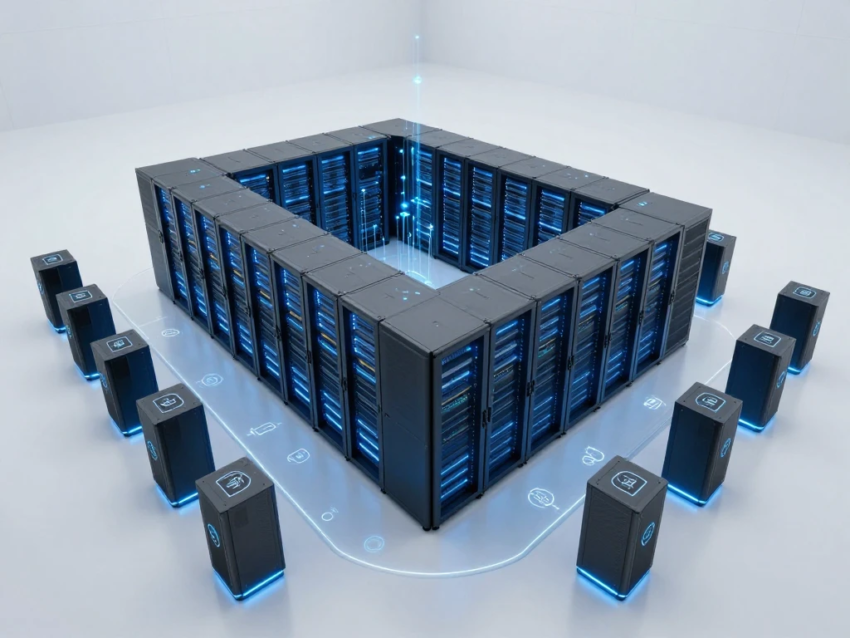
Cloud computing has become one of the most important foundations of modern digital technology. Businesses, developers, governments, startups, and individuals rely on cloud infrastructure for applications, databases, storage, analytics, artificial intelligence, communication, and digital services.
The future of cloud computing is moving beyond traditional virtual servers and online storage. Emerging technologies such as artificial intelligence, AI agents, edge computing, serverless architecture, cloud-native applications, automation, advanced cybersecurity, and distributed infrastructure are changing how cloud platforms operate.
Organizations are increasingly looking for cloud environments that are faster, more intelligent, secure, scalable, and cost-efficient. At the same time, the growing demand for AI applications is creating new requirements for specialized computing hardware, high-speed networking, large-scale data storage, and advanced cloud infrastructure.
Cloud computing will likely remain an important technology foundation throughout the coming years. However, the way organizations use the cloud is expected to change significantly.
This guide explores the future of cloud computing, including AI-powered infrastructure, edge computing, serverless technology, cloud automation, cloud security, AI workloads, hybrid cloud, multi-cloud, data platforms, sustainability, and next-generation digital infrastructure.
What Is Cloud Computing?
Cloud computing is the delivery of computing resources and technology services through internet-connected infrastructure.
Cloud platforms can provide:
- Computing power
- Storage
- Databases
- Networking
- Software
- Artificial intelligence
- Machine learning
- Analytics
- Security
- Developer tools
Instead of purchasing and maintaining all physical infrastructure locally, businesses can access resources from cloud providers.
This approach allows organizations to scale their infrastructure according to changing requirements.
Why the Future of Cloud Computing Matters
Businesses are generating more data and using increasingly complex digital applications.
Modern workloads include:
- Artificial intelligence
- Generative AI
- Big data
- IoT
- Real-time analytics
- Digital commerce
- Cloud-native applications
- Remote collaboration
These workloads require flexible and scalable infrastructure.
The future of cloud computing will focus on providing technology resources that can support these requirements efficiently and securely.
1. Artificial Intelligence and Cloud Computing
Artificial intelligence is expected to become one of the most important forces shaping cloud computing.
AI workloads require significant computing power, memory, storage, and networking.
Cloud platforms can provide access to:
- GPUs
- AI accelerators
- Machine learning infrastructure
- Large-scale storage
- Model development environments
- AI deployment services
Businesses can therefore use advanced AI capabilities without necessarily building their own large-scale computing infrastructure.
2. AI-Powered Cloud Management
AI will not only run on cloud infrastructure. It can also help manage the cloud itself.
AI-powered cloud management systems can potentially:
- Monitor infrastructure
- Detect unusual activity
- Predict resource requirements
- Optimize computing capacity
- Identify performance problems
- Reduce unnecessary spending
- Automate routine operations
This could make cloud management more intelligent and efficient.
Instead of manually monitoring every system, IT teams may increasingly work with AI-powered operations platforms.
3. AI Agents in Cloud Operations
AI agents are another emerging development.
An AI agent can potentially understand a goal, analyze information, use approved tools, and perform multiple steps to complete a task.
In cloud environments, AI agents could assist with:
- Infrastructure management
- Application monitoring
- Security analysis
- Cost optimization
- Troubleshooting
- Deployment
- Documentation
For example, an AI agent could identify an application performance issue, analyze relevant logs, recommend a solution, and prepare an approved configuration change.
Because cloud infrastructure can affect critical systems, organizations will need strong permissions, monitoring, and human oversight.
4. Edge Computing and Cloud
Edge computing is expected to become increasingly connected with cloud infrastructure.
Traditional cloud computing often processes information in centralized data centers.
Edge computing moves some processing closer to the location where data is generated.
This can be useful for:
- Smart cities
- Autonomous vehicles
- Industrial IoT
- Connected devices
- Healthcare systems
- Real-time applications
The cloud can provide centralized management and large-scale processing, while edge systems can handle time-sensitive workloads locally.
5. Cloud and Edge Integration
The future may not involve cloud computing replacing edge computing or vice versa.
Instead, businesses may use both.
For example:
Device → Edge Processing → Cloud Platform → Data Analytics → AI
An IoT device could collect information, an edge system could process urgent data, and the cloud could perform larger-scale analysis.
This architecture can support applications requiring both low latency and large-scale computing.
6. Serverless Computing
Serverless computing allows developers to run application functions without directly managing traditional servers.
The cloud provider handles much of the infrastructure required to execute application code.
Serverless architecture can provide:
- Automatic scaling
- Reduced infrastructure management
- Event-driven processing
- Flexible resource usage
- Faster development
Serverless technology is likely to remain important as developers seek simpler ways to build cloud applications.
7. Cloud-Native Applications
Cloud-native development focuses on building applications specifically for cloud environments.
Common technologies include:
- Containers
- Microservices
- Kubernetes
- Serverless functions
- APIs
- Infrastructure as code
- Automated deployment
Cloud-native applications can be designed for scalability and resilience.
As businesses modernize their software, cloud-native development is expected to become increasingly common.
8. Containers and Kubernetes
Containers allow developers to package applications and their dependencies into portable environments.
Kubernetes and other orchestration technologies help manage containerized applications at scale.
Future cloud environments will continue using containers for:
- Microservices
- APIs
- AI applications
- Web applications
- Development environments
Containers can make applications easier to deploy across different infrastructure environments.
9. Hybrid Cloud
Hybrid cloud combines public cloud infrastructure with private or on-premises environments.
Many businesses will continue using hybrid architectures because they have existing systems that cannot immediately be moved to the public cloud.
Hybrid cloud can support:
- Legacy applications
- Sensitive data
- Specialized workloads
- Cloud applications
- Backup systems
Future hybrid cloud platforms are likely to provide better management and integration between different environments.
10. Multi-Cloud Strategies
Some organizations use multiple cloud providers.
A multi-cloud strategy can help businesses access specialized services from different providers.
Potential benefits include:
- Provider flexibility
- Specialized infrastructure
- Geographic options
- Workload optimization
- Reduced dependence on one provider
However, multi-cloud management can be complex.
Organizations need consistent security, identity management, monitoring, and cost controls across different platforms.
11. Cloud Security in the Future
Security will remain one of the most important priorities for cloud computing.
Future cloud security strategies are likely to focus on:
- Zero Trust
- Identity security
- Encryption
- AI-powered threat detection
- Automated security monitoring
- Application security
- API security
- Cloud workload protection
As more business processes move to the cloud, protecting identities and access permissions will become increasingly important.
12. AI-Powered Cloud Security
Artificial intelligence can help security teams analyze large amounts of cloud activity.
AI-powered security systems may detect:
- Unusual login activity
- Suspicious network behavior
- Malware
- Data access anomalies
- Misconfigured resources
- Potential attacks
Automation can then help security teams investigate and respond more quickly.
Human security professionals will still play an important role in validating significant security actions.
13. Cloud Data Platforms
Data is becoming increasingly important for businesses.
Future cloud platforms will continue providing advanced data services for:
- Data warehouses
- Data lakes
- Lakehouse architectures
- Real-time analytics
- Machine learning
- Business intelligence
Organizations will increasingly combine data platforms with AI systems to generate insights and automate business processes.
14. Cloud Databases
Cloud databases are also evolving.
Future cloud environments may provide increasingly sophisticated:
- Relational databases
- NoSQL databases
- Distributed SQL
- Graph databases
- Time-series databases
- Vector databases
Vector databases are particularly relevant to AI applications because they can support similarity search and retrieval workflows.
15. Cloud and Generative AI
Generative AI is likely to become deeply integrated into cloud platforms.
Cloud services can provide infrastructure for:
- Large language models
- Image generation
- AI assistants
- AI applications
- Retrieval systems
- Model training
- Model deployment
Businesses can use cloud-based AI services instead of building every AI component themselves.
This could accelerate AI adoption across industries.
16. Cloud Computing for Software Development
Cloud computing is changing how software is created.
Developers can use cloud platforms for:
- Development environments
- Code repositories
- Testing
- CI/CD
- Databases
- Application hosting
- Monitoring
Cloud-based development environments can help developers work from different locations while maintaining access to shared infrastructure.
17. DevOps and Cloud Automation
The future of cloud computing will remain closely connected to DevOps.
Automation can help teams manage:
- Application deployment
- Infrastructure
- Testing
- Monitoring
- Security
- Scaling
Infrastructure-as-code technologies can make cloud environments repeatable and easier to manage.
Automated pipelines can also reduce manual deployment tasks.
18. Cloud Cost Optimization
As cloud adoption grows, controlling costs becomes increasingly important.
Future cloud platforms may use AI to automatically identify:
- Unused resources
- Over-provisioned servers
- Inefficient workloads
- Storage waste
- Expensive configurations
Cloud FinOps practices will help organizations understand and optimize infrastructure spending.
Cost management will become an essential part of cloud strategy.
19. Sustainable Cloud Computing
Sustainability is becoming increasingly relevant to data center and cloud infrastructure design.
Cloud providers can improve efficiency through:
- Better server utilization
- Efficient cooling
- Optimized data centers
- Renewable energy initiatives
- Efficient computing hardware
Businesses can also reduce waste by optimizing cloud workloads.
Future cloud systems may increasingly provide tools that help organizations understand their infrastructure’s resource consumption.
20. Cloud Computing and IoT
The Internet of Things will continue generating massive amounts of information.
Cloud computing can provide the infrastructure required to store and analyze IoT data.
Potential applications include:
- Smart homes
- Smart factories
- Connected vehicles
- Agriculture
- Healthcare
- Smart cities
Edge computing can process urgent information locally while the cloud handles larger-scale analytics.
21. Cloud Computing and 5G
5G networks can support faster wireless connectivity and lower latency.
Cloud and 5G technologies can work together to support:
- Connected vehicles
- Industrial automation
- Smart cities
- AR and VR
- Remote services
- IoT
As wireless networks become more capable, cloud applications can increasingly interact with connected devices in real time.
22. Cloud Computing and Digital Transformation
Cloud computing will remain a major part of digital transformation.
Organizations can use cloud services to modernize:
- Applications
- Data infrastructure
- Customer services
- Business processes
- Communication systems
Cloud platforms can help businesses introduce new digital services without building every infrastructure component from scratch.
23. Industry-Specific Cloud Platforms
Cloud computing is becoming more specialized.
Future cloud services may increasingly focus on specific industries such as:
- Healthcare
- Banking
- Retail
- Manufacturing
- Education
- Government
Industry-focused cloud platforms can provide specialized applications, compliance features, analytics, and security controls.
24. Cloud Computing for Remote and Hybrid Work
Remote and hybrid work models continue to depend heavily on cloud applications.
Cloud services can provide access to:
- Documents
- Communication
- Collaboration
- Project management
- Business software
- Data
Future cloud platforms will likely continue improving collaboration and productivity features.
25. Distributed Cloud Infrastructure
The future of cloud computing may involve infrastructure distributed across multiple locations.
Instead of relying entirely on centralized data centers, organizations may use a combination of:
- Public cloud
- Private cloud
- Edge computing
- Local infrastructure
- Specialized data centers
Distributed infrastructure can support applications requiring geographic flexibility and low latency.
Benefits of Next-Generation Cloud Computing
Future cloud technologies could provide several benefits.
Greater Scalability
Cloud infrastructure can dynamically respond to changing demand.
Better Automation
AI and automation can reduce repetitive infrastructure tasks.
Faster Innovation
Developers can access advanced computing and development services quickly.
Improved Security
AI-powered monitoring and Zero Trust architectures can strengthen security.
Better AI Access
Cloud platforms can provide infrastructure for advanced AI workloads.
Lower Infrastructure Complexity
Managed services can reduce the need to operate physical infrastructure directly.
Challenges of Future Cloud Computing
Despite these advantages, several challenges will remain.
Security
More connected systems can create more potential attack surfaces.
Complexity
Hybrid, multi-cloud, edge, and AI environments can become difficult to manage.
Cost
Advanced AI workloads can require significant computing resources.
Compliance
Businesses must manage data protection and regulatory requirements.
Skills
Organizations need professionals with cloud, AI, cybersecurity, and automation expertise.
Vendor Lock-In
Heavy dependence on provider-specific services can make migration difficult.
How Businesses Can Prepare for the Future
Organizations can prepare for future cloud technologies by following a practical strategy.
- Evaluate existing infrastructure.
- Identify applications suitable for cloud modernization.
- Develop a strong cloud security strategy.
- Adopt automation gradually.
- Train employees in cloud technologies.
- Monitor infrastructure costs.
- Explore AI use cases.
- Prepare for hybrid and multi-cloud environments.
- Improve backup and disaster recovery.
- Review cloud architecture regularly.
Businesses should focus on real operational needs instead of adopting technology simply because it is new.
The Future of Cloud Computing in Business
Cloud computing will likely become increasingly integrated into everyday business operations.
Instead of viewing the cloud as simply a place to host applications, organizations may treat it as an intelligent technology platform.
Cloud environments could combine:
- AI
- Automation
- Data analytics
- Security
- Application development
- Edge computing
- Digital identity
- IoT
This combination could help businesses build more responsive and automated digital systems.
Conclusion
The future of cloud computing is being shaped by artificial intelligence, AI agents, edge computing, serverless architecture, cloud-native development, automation, cybersecurity, data platforms, hybrid infrastructure, and distributed computing.
AI is particularly important because cloud platforms provide the computing resources required for modern AI workloads while AI can also help optimize cloud infrastructure, security, and operations.
Edge computing will bring processing closer to users and devices, while serverless technologies can simplify application development. Containers, Kubernetes, DevOps automation, and cloud-native architectures will continue helping developers build scalable applications.
At the same time, organizations will need to manage security, costs, compliance, vendor lock-in, and infrastructure complexity.
The next generation of cloud computing will likely be more intelligent, automated, distributed, and specialized.
Cloud computing is evolving from a simple infrastructure delivery model into a comprehensive digital foundation for AI, software development, data analytics, IoT, automation, and next-generation business technology. As these technologies continue to converge, cloud computing will remain a critical part of the digital future.